Exposure, pt.2.

<–Withering Heights.                                                    Exposure, pt.3.–>

[Exposure, pt.1.]

In the second half of Exposure pt.1, we looked at three truths about the community that is the epicentre of this blog’s main events that have been exposed by the events.  These were:Related image

  1. Lack of Sentimentality.
  2. Short memories.
  3. Group-think and/or Irrationality.

In pt. 2, we’ll explore truths 3-6.  Our list of principles, I trust, will follow next week.

Fourth, lack of self-awareness.  Some examples of this have been explored before, but we’ll limit ourselves to a few, and they’ll be in the form of quotes or paraphrases of what some of the pastors involved have said.

Church visitor 22: ‘Wow, you’re really concerned about truth!’  22 to 42: ‘Simon Templar is very enthusiastic about justice; do you think perhaps he could get a career in the legal profession?’  Implication: If you’re into justice, truth, and virtue, clearly the pastorate isn’t the place for you; that’s not really what we’re about around here…

From a pastor on the Oversight Committee, with the power of career life or death: ‘Simon, you’re taking pot-shots at me, and I’m always having to run for cover!’Image result for minion whaaat  Implication: wait, what?  I’m making you feel like a target?  Whaaat?

From a pastor on the CIC: ‘You should have submitted to the process, then maybe we would have done right by you.  Maybe.’ Read: well, since we didn’t actually read or interact with any of the documentation,* we can’t really discuss our conduct or whether you deserved any of this, but I know we didn’t like your attitude, which consisted of asking us to explain ourselves, so I can excuse us from any accountability based on that–that you made us uncomfortable and therefore weren’t submitting (to the process).  Being ‘cooperative’ here means, ‘don’t say anything, let them fumble about in the darkness and destroy you, because that’s what they’re there to do, apparently–some kind of a job, regardless of whether they do it well.’

[*The documentation addressed to the CIC from mid-September to the time of the pastor’s complaint about the overwhelming amount of written communication consists of:

–1 overview letter sent 15 September 2016, 3 pages, along with a supporting document recounting incidents with the Oversight Committee, 3 1/2 pages.

–1 follow-up letter sent 17 October 2016, 2 pages.

–1 letter as an addendum that of the 17th, sent 31 October, 2 pages.

–1 essay on the Star Chamber, sent 4 November (ST was at that point unaware that the OC had recommended to the CIC that he be defrocked, and that the CIC was meeting that very day to discuss this), 3 pages.

–1 letter sent 7 November, 2 1/2 pages.

Depending on how you want to count them, it’s 5 or 6 documents, up to a total of 16 pages, sent over the course of almost 2 months, roughly 53 days.  16/53=.3018, or, less than 1/3 page per day.  Maybe 2 paragraphs or so, required of men who on paper have the obligation to ‘handle’ this rather weighty matter.  But they were overwhelmed, dontcha know…

Of course, it’s hard to be overwhelmed by something you haven’t even looked at; back in the autumn, regarding the key initial documents from mid-September, at least 3 of the 5 men admitted to not having read them (I think it’s 3.  I suppose the guy who wouldn’t return any phone calls, texts or emails could have read them…we’ll just never know, like whether there was a second gunman on the Grassy Knoll).  See truth 6 below.  These 16 pages, I might add, are not in small font, nor do they have narrow margins.  One wonders how the sermon-writers on the committees who did read all, let alone any, of these 16 pages, and found it particularly arduous, approach a biblical commentary; on the flipside, if the laymen on the committee can’t read, what exactly are they doing on the committees? 

My reaction though is that 16 pages over two months seems like a lot to them because they themselves don’t write, so writing substantial (grammatically correct as well as articulate, strikingly so when compared with samples of their writing) amounts of material doesn’t seem to them normal.  And of course, if they don’t take this situation all that seriously, writing that amount of material will also be to them very inconvenient.  Because not only may they not be writers, but also, they likely are not regular (certainly not close) readers of text that requires significant (and continuous) mental engagement.

[Excerpts of these letters may be included as evidence in the future.]

Fifth, inability to hear anything that contradicts preconceived notions about what happened, or who someone is.  This is connected to point three in Exposure, pt.1.  I don’t feel I’m yet in a position to explore this point at length, though I’m sure it is at the heart of what went on in 2016.  People heard the testimony of the church visitors at the Classis Meeting in December 2015, heard Simon Templar and 42 (for instance) maligned and marginalized by others, while the two of them went unheard, and that pre-empted any future objective hearing (see the next ‘truth’).  This helped to create a conspiracy–often an unwitting one, the people in it are so clueless. 

Image result for lion in winter philip geoffrey

I’m registered to take a course on the psychological aspects of approaches to evidence in March; I’m hoping this will help me to shed some light on why there’s so much selective listening and deafness going on in classis Northern Michigan.  Though I can say that there is some evidence of either closed-mindedness or intellectual laziness, since there has still been ZERO interaction with yours truly about this blog…

Sixth, lack of professionalism.

Image result for disney robin hood prince johnWhere should we begin?  This topic definitely spills over into others, like those that will be covered in pt.3.  But we’ll take a stab at it from a couple of angles. 

First would be operational incoherence that includes pervasive conflicts of interest. We’ll go through just the men on the CIC and leave it at that:

Pastor 1, the clerk of classis: his church is on financial life support from the ‘Classis’ (who or what is that, again?) who ‘approved’ the Article 17 in December 2015, and whose OC has been bungling their end of things for the past year.  He is thus bound not only by Classis money, but by Classis favour–he can’t afford to rock the boat.

Pastor 2, regional pastor and chair of the CIC: has to maintain personal ‘relationships’ and thus ‘goodwill’ with every pastor in his care, which is all of classis.  While a friend to ST, he also saw 21 on a regular basis throughout 2016 and finds it difficult to see people and their actions for what they really are; is compelled by his position to give everyone, including the wrong people, the doubt ad infinitum, long after they’ve demonstrated they don’t deserve it.  It’s easier to tell the one guy under the boot of the Classis monster what he has to do to change and kiss up to them, than to stand up to your pool of peers with whom you’re stuck and tell them they’re all wrong.

Pastor 3, ‘youth’ pastor, member of both the CIC and OC.  *cough* NO LIE!  Here’s the email exchange between him and me:

9 November 2016:

Dear Pastor 3–,

I am ‘reaching out’, as the buzz-phrase goes, to you from the UK.  I read your profile on —- CRC’s website; in addition to being their youth pastor, you’ve also been on my father’s ‘Oversight’ Committee, and the CIC as well.

I’m wondering whether you would be willing to talk to me (via phone or Skype) for a few minutes?  If you give me your number, I can make an international call quite easily, or we can exchange Skype handles and make contact that way.  There is a five-hour difference between our respective time zones, but if you give me a list of dates and times when you are available, I’m happy to call at your convenience.  Please let me know.

Regards,

ekklescake

10 November:

Dear ekkles,

Thank you for your offer, but I respectfully decline.

Take care,

Pastor 3–

14 November:

Dear Pastor 3–,

Thank you for your reply.  I was asking you for a favour, not offering one, but I suppose that’s moot at this point. 

At any rate, perhaps you do not object to writing just a little?  I only wanted to ask two questions: first, do you think the way the OC (and CIC) have treated my father sets a good example to the youth of the CRC in general, and to those in —- CRC in particular? Second, if the answer to the first question is yes, how so? I only ask because of what I read on your profile on the church website, and because you are on both committees.

Thanks in advance for your interaction on this. For what it’s worth, I’m probably younger than you (though maybe not by much).  Perhaps that means I fall under the spiritual purview of you as a youth minister?

Regards,
ekklescake

16 November:

Dear ekkles,

Unfortunately I am also going to decline this second favour you have asked.  It seems to me you already have your answers and no matter what I say,Related image you will use my words to support your stance.

I sincerely hope you can find peace with God surrounding the events of your father’s separation from A. CRC, even if you don’t have all the answers.

Take care,

Pastor 3–


16 November:

Dear Pastor 3–,
Since this email is a bit longer, I’ll put the most important part first: Why can’t you just tell me the truth, and be confident in knowing it’s the truth? 
You write as if you already know me, or know what I’m all about; based on this conception of who I am and how I think, if I had ‘answers’, do I seem the type to need your words to support my ‘stance’?  I do want to know what you, in your position, with your profession of what you think your role in the church is, think of all ‘this’.  I don’t like being accused of dishonesty, and find that very offensive and quite surprising, since you don’t know me. 
Again, perhaps you think you do, because of my blog or something?  Please give me any example from my blog where I have misappropriated someone else’s words to support my arguments.  You must have at least one, since you’re being so cavalier with your insinuations.  As I haven’t heard the perspective of anyone in this post-2015 string of events, there’s no precedent for asserting that I wouldn’t read what you have to say and interact with it in an honest fashion.  Still, I can say that I do appreciate that you’re not treating me like a child, by just blowing me off–you’re blowing me off and telling me what I’ve done wrong (or will do wrong) to earn being ignored. 
At any rate, if I were to ‘use [your] words’ to ‘support [my] stance’ in a way that’s irresponsible or dishonest, wouldn’t you be able to counter my misdeeds handily if everything is in writing?  Shouldn’t that offer you ample protection?  Anyway, pretty much anyone could use that as an excuse to never explain anything–‘Well, you’ll just use what I say to support your own position’ (with the intimation that the use is invalid or underhanded).  I don’t think the possibility of someone misusing information negates the obligation of people in power to articulate justification for their actions. 
On the other hand, if you can’t express yourself clearly enough not to be misinterpreted or misrepresented, since you evidently are concerned about this, I hardly think that’s my fault.  Or, if you don’t have the ‘words’ to explain what you think about this situation, or can’t explain your involvement in it, perhaps that’s good reason not to be involved?  This smacks of evasion– people in ‘official’ positions in this situation get to just walk away from the explosion after some promise to ‘pray’ or some vague wish for ‘peace’ and ‘healing’.  Gee, I thought Christian leaders actually did something to help people once in a while. 
Cynically yours,
ekklescake
**
I’m sure you’ll be shocked to know that I never heard anything back.  Probably he saw the length of this email and had to take a nap.  Also note–I never had any communication with this man before that initial email sent on November 9th.  This is the kind of Christian leadership engagement to be worked with and within.


Layman 1: is fellow parishioner/consistory & singing group member as Rogue K on the OC.  That’s right, they’re on the council of the church who were approached about the issue of the Ss and did…nothing

Layman 2: can’t even be polite.  Although we’ve got two different stories as to why this is–we’ll come back to this.   

So, conflict of interest, here in the selection of personnel and the various hats they wear and diverse interests they carry with them into committee meetings or when reading (or not reading) their emails.

Professionalism is also lacking in failure to keep interested parties appraised of goings-on, of meetings, of those meeting’s subject matter, of correspondence between the committees, e.g., the recommendation by the OC to the CIC–when exactly was ST going to find out, if it had been left up to them to follow up?  this is a counterpart to the double-whammy of booting ST out of the September 2016 Classis Meeting, without having informed him of what the OC planned to present there, and thereafter failing to give him a copy of document they presented, which was only done after ST asked pastor 1 of the CIC to ask the OC to copy him.  Shabby–that kind of thing in the ‘real world’ in which I live and work is completely unacceptable. 

Linked to that is failure to reply to communications, even to acknowledge receipt, after a peer or colleague has specifically asked for it, in writing and more than once.  Then there’s the crummy email exchange I had with Pastor 3–, which speaks for itself above ^^^.  Accusing a person you’ve never met of ulterior motives and underhandedness without even a reason or example is both unprofessional and very bad manners.  In the Old West, there’d have been precedent for demanding a person take back such ‘fightin’ words.’  Unfortunately, we’re dealing with Christians who hate being questioned and challenged, and who apparently are never wrong.


Image result for gilligan's island the secret of gilligan's island
‘A Howell is never wrong! Break off a piece and make it fit!’


Author’s note: embedded links to come, and stay tuned for pt.3!

[Return to Table of Contents.]                             Exposure, pt.3.–>


Withering Heights

<–A Slight Detour.

Where am I?

I stand alone on a barren heath, where the grass grows sideways, bowing to the wind.  My head pounds, making it feel somehow distant, separate from the rest of my body. But the air is bracing, and it brings me back to myself.

Related image

The sky is half-clear, clouds sweeping or being swept across it like pieces across a chessboard, gracefully and soundlessly.  The sky is blue, but not bright, the cloud not too dark, but not too soft.  The air is akin to the winter gusts that tear through your coat and scarf , rushing down from the Arctic over the plains, gathering force and cracking bitterness of cold as they go.

It is, however, salty, carrying with it the traces of brine from the west.  In that direction, looking down from where I stand,  I see a white house.

I can see it, and inside of it, though it be even farther away than it seems.  There’s a blue glow within, the sound of voices and the smell of oven-fried steak, coffee and apple pie.  It is a scene rebuilt from memory–my memory, behold.  I see the chair in which I believe myself to be seated–to have sat? but there is nothing there.  Food on the plate disappears, a cup is drained, a card in the deck is lifted and added to the hand at my place.  The tiny flecks of vanilla in the ice cream are clearly visible there.

Other faces are there–sort of–and whose?  Only two I know for certain, yours, the cook, and yours, the banterer.

Not far off are loose stones for a project, a garden with corn grown tall, wood taking shape on the edge of the glade–all for the children, again, we hear–and a converted barn where the smell of roast turkeys past still lingers.  Voices, laughter, and an empty chair.

Am I seeing it with my own eyes?  Or rather, is this…from my memory?

Perhaps not.  For while I remember, I am not–was not–there.

A dog stops by the chair, and forImage result for golden retriever smile a moment there is a shape, and it reaches out to stroke her, smiling.  But she passes on, and the shape fades.

In and out of the house, I look here, there, see a sign with a name, a very familiar car, and, to my surprise, a large stone box.  Ah, not a box, but some kind of pyre, an altar.  It’s disused, but impressively made.  It has gems set in it, expenses proclaimed, with the names of the artists stamped on the edges and corners.  And lots of writing.  As the art of Islam takes in and returns the curving script of its book, so this altar is covered in words.

But they are printed a bit too large, I think to myself.  Yet they can’t be read–and they mean nothing.

I was never anything to you.

And in that way

I never was.

I was but a shadow in your house,

eating your food

and laughing at your jokes.

The fire burns elsewhere, and it burns blue.


[Return to Table of Contents.]


A Slight Detour…

<–Exposure, pt.1.                                                                      Withering Heights.–>

This post is full of links–that is because all the leg-work of exposing these many instances of sin and corruption (and in some cases, just laziness) in the church has been done by other people!  Credit given where credit is due, especially to the less well-known writers in the discernment and pursuit -of-justice arenas.  (Apologies too for the odd ellipses here and there; I had serious formatting issues in constructing this post.)

Now, then, onto the bumpy dirt road…

Image result for detour sign dirt road

The clergy as a class have never been perfect.  Naturally, since they’re made up of not-fully-sanctified human beings with a (defeated?) sin nature.  But they should at least have been, and be, upright.

If ever there were negative stereotypes about clerics, they have included a propensity toward theft from those in their care and embezzlement from their parishes, tendency towards ‘killjoyness’ or a degree of pharisaism mixed with hypocrisy, and craving for power or recognition.  Dante writing about Christian whitewashed sepulchres may as well skip over the usual, plain old vanilla sexual indiscretions of past generations, because if we’ve learned anything from the recent evangelical scandals, it’s that something about contemporary protestant groups’ power structures (for lack of a better term) and priorities have made them as susceptible to (founded) accusations of deviancy, such as child molestation, and of covering up reported cases of it, as the Roman Catholic Church. How can this be? What about the systems in place first makes groups like SGM  appealing to predators, and what about them drives the non-deviants to hide the evil and themselves victimise the abused by denying them first help and then justice?  (Head to Brent Detwiler’s blog for all you could possibly [not] want to know, and/or Google ‘SGM survivors blogs’.)  I don’t have the answer to this question, though the cause is probably related to the structure itself, the group’s theology, their priorities (relationships over morality? or at least over church discipline), and the dangerous presumption that all who name themselves Christians (especially of the group’s stripe) actually are.

The Man pointed out last night that mass media makes us more aware than before of such people and events, and it may be that, statistically speaking, there aren’t actually more sex predators after children and youth than there used to be.  It’s just that we hear about them, and a lot more about them.  While this is probably true, I can’t help but think that SGM (though I don’t know their fluctuating numbers of members over the years) has more than their share of deviants, and of conscience-challenged people to enable them.  At any rate, it’s more the nature of the phenomenon than the bare numbers that concerns us here, though I am curious about the proliferation of this kind of evil in general.  These are the last days, so it’s entirely possible that such proliferation is inevitable, both inside the church (and what calls itself the church) and outside of it.

With their years of what has probably become compulsive covering up of such egregious sin, SGM has opened itself up to suspicion and ridicule like this, which hitherto has been Image result for savage eye catholic churchmuch more associated with the hierarchical self- and magisterium-protecting and mutual back-scratching of the RCC. And this ridicule need not be expected only from secularists (who may, if they’re not too influenced by Richard Dawkins, have taken better care of their children and charges), but from the victims and those who have demanded leadership at SGM, erm, change their MO. Perhaps repentance and resignation would be in order for many at the top.

No, SGM and churches and other ministries like them under scrutiny for systematically hidden and/or excused sin, have lain themselves open to the critique, challenge and ridicule of their fellow protestants and evangelicals (assuming men like CJ Mahaney and Grant Layman do have a real Christian commitment). SGM could fittingly be the subject of a cartoon or satire about supposedly spiritual men in positions of social influence and moral authority stealing children…

And from Romans, we know that one needn’t be the abuser to be culpable– the leadership who failed to report the allegations to the police themselves and advised others against doing so, who took blood money for vacations in exchange for their silence, who transferred perps out of local ministry without public rebuke or an offer for support toImage result for bloody wolf unreported victims, who continued to parade themselves at conferences and unfairly expected their big name ‘friends’ in the (reformed) public eye to defend them with bogus or lame arguments about truth and justice (thereby asking those friends to make themselves look foolish in the process)… Well, they may not have molested these kids or cheated on their spouses, but they approved of those who did.  And no doubt some type or types of abuse is still going on, since the sheep of Christ are easy targets, and the shepherds at SGM are happy to turn a blind eye, or even, apparently, to provide access to the lambs in the fold.


When I saw the photo of one of the pastors newly dumped, I started to cry. He is entangled in, and has been dismissed due to some kind of sexual sin–it’s not clear if it is assault on minors, and the gist is rather that it is something different. So… Why cry? Well, because these men who have been enabled in all this– even they have been done a disservice by SGM’s hypocrisy. Because they still have souls, and for others to overlook their sin, and therefore encourage it, has served to increase their shame and guilt. They should have been both reported to the authorities and called to repent, which is what will matter in eternity, particularly to the abusers. And in eternity, the sin committed by their enablers will also be a topic of conversation when those men themselves come before the Seat.
..
As with Tullian Tchividjian (read these headlines backwards to follow the chain of lies), those who (in my opinion) worked and talked overtime to explain things away and put him on the fast-track return to ministry not only shamed Christ’s church by their lack of principles and refusal to carry out church discipline, but they did the worst thing they could by the person they claimed to be trying to help (if they were; one must wonder in this social media age if things are done to make their doers look good, in this case, ‘supportive’, ‘forgiving’, etc. One must also wonder if the same would be done for someone less famous, and, let’s face it, less handsome). And then… what did he do? He took advantage of them, and the shame of all increased.  (Personal note: we should probably pray for the woman who was foolish enough to marry him.)
..
We could go on at length about the ‘friendships’ that cause people in the blogosphere to jump publicly to the defense of the accused, and the fact that they’re so careless–not only of their own reputations, but also of the well-being of the victims, especially if what the victims say is true.  Todd Pruitt (and others, on Tom Chantry**), Kevin DeYoung  (and others, on CJ Mahaney), Chris Rosebrough (on Daniel Emery Price [H/T puritangirl]; at least Rosebrough has posted a statement about why he had to remove all his Tullian Tchividjian-related material; perhaps he can bring himself to follow his own instruction and backpedal [i.e., repent of having gone to the mat for Price and withdraw his threats of lawsuits]), and many others, several of whom have benefitted evangelicalism in different ways, have struck an imbalance when asserting more than simply, ‘The law requires proof of guilt via proper judicial proceedings, and we should assume innocence until proven otherwise; let’s just see what happens at trial.’  That’s all anyone should say.  And then pray that the truth comes out.  To say anything more after people credibly allege that these ‘leaders’ have lived free under the sun for years after committing acts of various kinds of abuse can be construed by true victims as joining the voices of the excusers and defenders who actively helped to keep things hushed up (like the SGM leadership).
**Apparently inconsistent with this acclaimed MoS noted on thouarttheman from 8 months before, although read here the response of R. Scott Clark to Todd Wilhelm’s comments on the Tom Chantry arrest; also see here for Todd Pruitt’s stance on CJ Mahaney in Spring 2016.
..
People must recognize that they lose credibility when they get on their computers to say, ‘Don’t judge, don’t gossip, nothing is proven, what would Jesus do?!’, after they have been palling around as ‘friends’ and conference associates with the accused, or recommending their blog articles, for years.  Best to say as little as possible–and the same goes for anyone in the blogosphere who does not have first-hand knowledge.
..
At any rate… How many people really know their ‘friends ‘like they claim they do on the internet, when they either tell other people to be quiet, they are certain these allegations are false and their friend pastor x would never do such a thing, or when they tell people to stop talking about x, he’s repented and so very sorry and broken about all this, and we should be moving on and talking forgiveness now?  Notice these aren’t in quotes, and I’m not attributing  them to anyone–this is the gist of some of what is being said or has been said (e.g., about Tullian Tchividjian–that was real repentance…)  People are so superficial, so in a hurry…  as a side-note, one must wonder if there’s a certain level of inevitability about putting one’s foot in one’s mouth when anyone becomes a big shot, even when becoming known for critiqueing the culture that allows for Christian big shots and celebrity in the first place, because over time the standards to which they hold themselves begin to drop, which is manifested in poor arguments, hasty and uninformed judgments, or offering criticism without evidence.
Image result for celebrity pastor
Who are these people?  I don’t know, but apparently they’re a pastor-couple with a TV show.

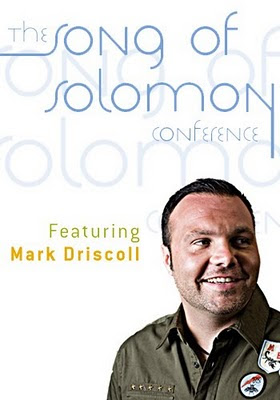
And then of course, there are cases like Mark Driscoll’s (the sobering remarks in this article about the ‘good ol’ boys’ club’ that comprises the ‘Neo-Calvinist’ movement are difficult to read), the discovery of whose plagiarism was such an explosion that the

Image result for Mark Driscoll song of solomon
Pastor Mark can tell you all about how teens have a one-track mind, because he never grew up.

unchurched heard about it everywhere, I’m sure.  But long before that BOOM, the testimony of those who were abused at Mars Hill, and the sober critique of his sub-biblical methods, attitudes, and teaching were readily available, just like all the legal documentation concerning the sexploits of those associated with SGM and the likes of Doug Wilson are freely, readily available.  But people choose not to inform themselves (of course, the above-linked article about conferences asserts that there is an awful lot of mammon involved in these ‘networks’), to their own detriment as well as to that of the victims of the ministers and their ministries, and unto the continued ‘free pass’ granted to the reprobates because not enough, or not the right, people are taking a stand.  And so Mark Driscoll, without even the lip service of ‘repentance’ given in Tullian’s case, can skitter away from Seattle, and turn up again like a bad penny in Phoenix.

It should be pointed out that the electronic trail of proclaimed support for ne’er-do-wells does tend to disappear (just like some jailed or fallen pastors’ sermons off of church websites) once the ne’er-do-wells are arrested.  As a result, we are indebted to watch blogs who provide screenshots of posts, articles, and talks which are no longer available on their home sites (is it to TGC’s credit that this is still available, or is it a sign that they still don’t get it?).  Often, unlike in the case of F4F and the Tullian materials mentioned above, these items are deleted without explanation or acknowledgement.  It’s as if they were never there.  And, those who defend too vociferously without knowing what they’re talking about (while spending an awful lot of time attacking other people for much more egregious things, like being continuationists) may have to resign from ‘talking’ online altogether.
..
Why this detour from the mini-series at hand?  Because I’ve been distracted by others’ writing, and because I find it so strange, all this messy business, with folk looking the other way when ‘pastors’ and ‘church leaders’ do something really heinous, like fondling 14-year-old boys and then forcing those boys to accept their ‘apology’ and ‘forgive’ them and thereby swearing them to silence…  And a pastor in Northern Michigan who does nothing but preach the trustworthy word as taught and try to live with integrity is first kicked around by his council and church (including people he thought were his friends), and then by the collared brethren who are supposed to support him.  Cancer, physical affliction, is nothing compared to hopes disappointed by Image result for i claudius is there no one with integrityfellow Christians, and trust betrayed daily over the course of two years.
..
And there is none with integrity.
..
But while the contrast is an irony–other people wreak havoc on young lives and are excused and covered for, while truth-speakers are maligned and abused, the cover-up is in fact a common factor between Simon Templar’s case and that of, say, SGM.
..
A professed ‘love for the church’, and probably pragmatic self-interest, both in the sense of avoiding, a., a tarnished reputation and b., the cognitive dissonance that comes with seeing that reality and people around you are far other than what you’ve always believed, has led to a sick expenditure of lots of energy to quash the testimony and voice of victims of abuse (spiritual and verbal [slander & libel] in one case, all kinds in the other), and lots of bureaucratic conspiracy among ‘officials’ to just ‘make it (the truth and the consequent obligation to do something about it) all go away.’  But if you’ve read this blog, you know we’ve already tread this ground many times.  I rest my case.

Photo0506.jpg

[Return to Table of Contents.]                                                       Withering Heights.–>

Exposure, pt. 1

<–Testimony: Post from our Guest Contributor.                       A Slight Detour.–>

Image result for US cavalry remington

A New Year in the blogosphere, and a potentially positive development in the drudgery is at hand: intervention by some people with meaningful morality.

I plan to compile a list of basic principles which can be gleaned from this whole experience, but I will start from a different vantage point and see where that leads us.  Today, we will look at some aspects of this Article 17 and its aftermath that are unique; to be more precise, we will look at realities brought to light–or indeed brought into existence–by the A-17, concerning the people and community involved.

One can ask, and perhaps is compelled by nature to ask, ‘Why did this happen?’  Per this blog, there are multiple causes, factors, perhaps reasons, at the human level.  I’d dare to say that most of the causes, factors, and even motives of the major players have been (I hope accurately and responsibly) catalogued herein.  To come at it from a Christian perspective and raise the eyes to the level of divine cause, some things we will never be told in this life.  But we can speculate within certain parameters, and the Bible gives us a few different reasons for why God engineers or allows things to happen the way they do.  Sometimes, all we are told is that the unfolding of events is unto His glory.  Sometimes, events reveal something about His character, while by the same token the action of people shows or exposes the hearts of those people in particular, or aspects of human nature in general.

While this topic would certainly coincide with that of a list of basic principles, we’ll proceed as if they’re separate and continue this monologue in paragraph form (the principles, as I imagine them, would be in the form of bullet points).

So, why did this happen?

Let’s take a quick inventory of what happened in another A-17 situation and see how it compares.

For starters, it also was precipitated by a man with a psycho-spiritual problem, a narcissist with a compulsion for gaining influence, impressing people with both his confidence and intelligence, and with a bit of the snake-oil salesman about him.  This walking ‘black hole’ (H/T George R.) had engulfed a house church group of which he had before been a part; he/it has since erected and lost multiple small business alleged by some to be ‘shell companies’.

Image result for black hole

What is interesting is that for our purposes he attached himself to the pastor’s best friend in the congregation–both he and this friend were on the council at the time–and over the months before the A-17, the two met for breakfast EVERY DAY.  Most likely, so the black hole could talk (and boy, can he talk!).  The former friend, who also worked for the black hole in his business and was persuaded by this association to trade up to a much more expensive car than his family had ever been wont to drive, became the right-hand man in the drama, leading the charge by making phone calls, chairing meetings, running interference and defence for the black hole even after the pastor was gone.  I believe it was he who first made the motion that the black hole take over the pulpit after a congregation merger with an Asian group who met in the same church building; their pastor would remain head of their group, while the black hole would pastor the predominantly Anglo congregation.  When a suspicious parishioner asked about the black hole’s credentials, the reply, perhaps via a red-faced puppet, was, ‘Are you questioning my integrity?’

The fact that someone was willing to ask a question upon announcement of this hare-brained proposal was perhaps a harbinger of what was to come: in the months that followed the pastor’s departure, the vast majority of the congregation came to see the black hole for what he was–a charlatan.  And the numbers ebbed.  One year to the week after the pastor preached his last sermon, the church closed.  The would-be CRC mediator who had come in to assess the situation was had by the black hole (though he was warned in advance), and the handling by higher-ups was bungled, because people didn’t listen (how rare!).  The black hole killed the church in less than a year, while blocking any attempt to get an interim pastor.  But there was never any acknowledgment that the pastor had been right (rather, that he had been wronged), and there no doubt was never any discipline for the smooth-talking, power-hungry cheat, who is now plying his wares at a non-denom seeker-friendly church nearby.  I hope this new church is ‘reformed’ enough for him; at the time he and his wife joined the church he destroyed, he remarked with great significance, ‘I don’t know if Covenant is reformed enough for us.’

At any rate, it took relatively little time before he was found out.  Part of this was likely due to his unethical business practices, which no doubt were difficult to conceal from the church, since by the time the pastor left, a half-dozen of the church’s men were working for him.  One of them, one of the younger men in the congregation, was anxious to get out of that ‘snake pit’ in the weeks after the church became vacant, but he couldn’t put in his notice: the black hole had not paid him in two months, and he knew if he announced his intentions to quit, he would likely never see the check he was owed.

**

So now.  It is about 14 months since the A. congregational meeting at which Mr. Wonderful, the Fabulous Lucky #13, announced the ‘release’ of Simon Templar and tried to buck up the congregation (successfully, I might add, as we all know) with a bunch of Journey bluster.  ‘I seen him in a smoky room–the smell of wine and cheap perfume!!’  Whoops, wrong Journey.

Initially, 8 people left in the first month, plus the two young children of a young couple. That couple and their children subsequently came back.  In the last six months, another couple has left, one that had felt embraced and accepted by A. after some rough experiences in other churches.  According to my sources, there have not been any significant visitors in this past year, nor, of course, any sightings of the young people ST supposedly drove off with his fire-and-brimstone sermons, nor of the other couples who, it was claimed by the council, left only because of him during his tenure.  This is predominantly a LIE, and was demonstrated so by 42 in his rebuttal of the A-17 submitted to Classis NM in December 2015.  Where are all these people now (the ones who left A. between 2008 and the A-17)?  One of the women of A. did her own research, and even asked one of the families whether ST was the reason they left.  The answer was ‘No.’  The real reason? 13 himself.  I’m shocked.

So a few were onto the stink of this situation from the beginning, and several have smelt it since.  They may be more departures of long-term members in the coming weeks.  But the Deliverer hoped-for (and perhaps promised) by 13 never materialized, or rather, he wasn’t in the right denomination (he’s a Baptist) and he got called by a church in Kalkaska County.  A. is, almost needless to say, still vacant.

Now we should talk about what’s been exposed by this series of unfortunate events (Netflix is apparently putting out a Lemony Snicket original, by the way).

**

First, lack of sentimentality.  We all know the culture has taken the value of feelings too far, and uses them to justify all kinds of poor judgment and immoral behaviour.  But how does one react to the complete radio silence on the part of ‘Christians’ toward a couple who have not only been members of their congregation for decades, but also taught the adult Sunday School, and wrote a very striking letter about the evil nature of the church’s course?  Not only was there no interaction with that material (indicating the couple wasn’t taken too seriously), but no attempt was made to reach out to them (with one exception).

The other older couple who immediately left A. received cards and phone calls, perhaps attempts to woo them back (one of their adult children still attends A.; this may have been added incentive).  This couple gave the callers an earful.

But in spite of the tears shed, and love and sympathy expressed for ST, less than a month before by one of the women of the dissolved small group, no one from that pod has reached out to my family in the past year.  One woman saw fit rather to deride and lecture me and my sister, but we’ve gone all over that.  Those who are gone are also forgotten.  Some might wonder what a lack of show of sentiment–e.g., a verbal declaration to someone that you miss him or her, whom you’ve seen regularly for years and years–says about more biblically significant categories like love for the brethren and general compassion.  Of course, it may also say something about integrity, the fact that no one was motivated (enough) to talk to 42 & 43 about Kent Crockett’s book, but we’ll talk about integrity later.

Feelings trump everything, and we need to just ‘love on’ (I hate that expression) everyone.  Until they disagree with you.  Then you kick them to the curb and after 60 years of church membership don’t even give them a phone call.  And the faces in services are happy and smiling as if none of this had ever happened.

Image result for groundhog day movie clock

**

Second, short memories (see last few sentences of previous section).  Recently a contact preached at A., and was told by one of the elders with whom I met in October 2015 that the reasons for the A-17 were that ST was too ‘gloom and doom’ and ‘always had to be right.’  In autumn 2015 he said to my face (and to ST’s) that he didn’t believe either of those things was true, but that he and the council simply ‘had to do something’.  Read: it doesn’t matter if it’s true and people are just nit-picky (or even delusional, I might add), they’re threatening to leave!  And this man had been arguing with his cousins for years about their invalid points of view.  One has to wonder if, in the conversation with our contact, he offered or forgot to offer a disqualifier, that these were the alleged reasons but he didn’t hold to them himself–or if he doesn’t remember that he disagreed unequivocally at the time but has heard all the tripe for so long, with no countering argument, that now he believes it.  Sad.

But even at the time, that is, during the course of 2015, people contradicted themselves from one conversation to another, a whole ‘nother level up from asserting things about the pastor, when actions taken by him only weeks before utterly debunk those assertions.  The problem is, the person making those assertions has to be willing to consider the reality of the pastor’s behaviour, and then apply that reality to the validity of the assertion.  This is a lot to ask of people who live so much in the here and now, and want that which is most immediately convenient and expedient, and requires the least effort.

**

Third, irrational thinking or Group-think (propelled by the compulsive need to go along and get along).  This goes hand-in-hand with point two.  And we’ve been over and over this issue on the blog.  Because most individuals in this area prioritize getting along over doing the right thing (and particularly over the truth and thinking for themselves), this phenomenon is both widespread and essentially over-powering.  Many of the folk in the area are related by blood and by marriage, and they put family and (the veneer of) family peace ahead of all else.  And because the churches are peopled by families who make up most of the numbers (and are ethnically homogeneous) they do think alike, share the same values, and have a vested interest in avoiding any rocking of the boat, and in actively discouraging or opposing such by others.

This, combined with the culture of doing what makes you happy, is enough to overrule strong personal antipathies: one couple (the wife in particular) used to make no bones about proclaiming how much they couldn’t stand 13.  By the time everything at A. came to a head, they were on his ‘side’.  These were also sometime members of the small group.  While at the time we were still friends with 13, and knew his family better (and I thus didn’t understand why they didn’t like him), probably the wife’s instincts about 13 were right all along.  But she and her husband fell victim to peer pressure, temporal thinking and what they perceived to be a socially desperate situation.  And 13 was the hero making promises and apparently the only one ‘courageous’ enough to say what they had all allegedly been thinking.  Of course, the word ‘courageous’ requires reiteration that 13’s name never went on anything in all this mess, and neither did his ‘wordsmith’s’ (who nevertheless gave permission to share his name on this blog–which I may yet do!).  This wordsmith wouldn’t admit to writing the council’s documents on their behalf when asked point-blank about it.  But this too is evidence perhaps of Group-think: because none of the other five men naturally thought of any of the major nay-sayers complaints (mostly articulated and spread like manure by 13), none of them would have been capable of writing either the A-17 Request or the Letter to the Congregation.  It takes some mental leg-work to distil and crystallize such significant arguments, and it took someone like 21 to fake his way through legitimate and ‘Christian’ argumentation.

Image result for animal farm napoleonThe phenomenon is at its most frightening when you hear relatively intelligent and upright people saying very stupid and unbiblical or even amoral things–like, ‘I don’t care if x is true; y is how I feel.’  It’s a real-world, small-town, monolithic local church version of Animal Farm.  If people do not think independently (and especially if their minds aren’t conformed to Scripture and they don’t rely on the Holy Spirit to bear witness to them in moral and intellectual quandaries); if they believe all those who speak powerfully care about their best interests (notice that this trumps what honors God); if the big talkers successfully equate what people want for themselves with the ‘good of the church’, without appeal to what the Bible actually says is the church, and is good; if they can persuade the listeners to follow along, by first saying what they think the listeners want to hear (later this won’t be so necessary, as evidenced by Napoleon’s evolving arguments in the above-mentioned novella—they’ll have the peons trained to listen and obey even if the message becomes a difficult one); and if the now-elites repeat something often enough, they can shape the minds and reality of practically everyone.  There is no opposing someone who is effectually impressive to those who are pathetically impressionable.


To be continued…

[Return to Table of Contents.]                                       A Slight Detour.–>


“Testimony”: Post from our Guest Contributor. 5 December 2016

<–The Big Picture.                                                                              Exposure, pt.1.–>

The following piece is posted with the permission of the author, 43, and has not been edited in any way.  It needs no introduction:

Where do I begin, to tell the story?

I didn’t see it coming.

I figured everything out after the fact.

I couldn’t believe that our friends and fellows at Aa could, as a group, turn so suddenly, radically and cruelly on someone. The ‘someone’ that they turned on was their Pastor – Simon Templar.

The first time Pastor Templar preached at Aa in 2007, he used a sports analogy. In spite of that, I really liked him. His preaching was consistently researched, linear, insightful and always faithful and Biblical. I loved how he didn’t talk down to that country congregation as just about every other pastor, both those visiting and sometimes those in residence, did. I thought it was good to stretch our vocabularies and our theological insights. There is no time for wheel spinning and idleness in the Christian life! It is a Pilgrim’s Progress, onward and upward! I trusted Pastor Templar to help keep the Adult Sunday School on track theologically and solidly in the Reformed tradition that we all professed. Each Sunday, as we would file out of church and shake his hand, I always had a sincere appreciation of his preaching and told him so. As an example, once I said, “Pastor Templar, you set before us a theological banquet, a feast!” And I always meant what I said. It was the truth.

After the fact, I heard that people thought he was: ‘gloomy and his sermons made them feel sad and go home and cry’. I found that astonishing. My experience was that he was able to deliver sermons with conviction in them. Conviction of the seriousness of sin but that there is a way out and that way was, is and will always be, Jesus. I never felt pointed at, singled out, or made uncomfortable, even me… “such a worm as I”. To the contrary, Pastor Templar did an excellent job of including himself as a sinner in need of repentance and his hope as a forgiven follower of our Lord.

The first sign of trouble for me was when 42 and I were driving home from church one hot, July Sunday. 42 isn’t often shaken but he acted really funny on that drive to Cadillac. I was puzzled. What had troubled him? We had just left a typically fine service with an excellent sermon and the usual friendly chitty-chat afterward, I thought. Then 42 told me how, after church, 13 had stormed across the whole length of the fellowship room and charged up to 42 and another congregant and said words to this effect, “He has to go! We’ve had enough of this John the Baptist stuff!” 42 was stunned. When he told me the story on the ride back to Cadillac, I assumed it was a personal problem in 13’s life. In a ‘me thinks he doth protest too much’ way, I assumed some sinful behavior(s) and then the subsequent resistance in repenting of the behavior(s). While that may have been and may still be the case, there was so much more to come.

We were gone a lot that late summer and fall. Family in Indiana and Virginia kept us away many of the weekends as the dark clouds continued to gather in and over Aa.

42 and I were sitting in church on Sunday, September 20, 2015 when an announcement (the lead up is fuzzy in my memory because of what came next) that the Council was going to be ‘working with’ Pastor Templar and his ‘messages’. I thought, “I don’t think that the Council should stand between a called Minister of the Word and the Holy Spirit.” I continued to think, “It is like that portion of the Gospel where Jesus said the Pharisees were like children and their little chant that went something like: ‘We sang a song for you and you did not sing, we played the flute and you did not dance.” I mulled how the Council wanted Pastor Templar to ‘sing and dance’ for them and that was deeply, deeply wrong of them to interfere with the preaching of the Word and that this was a very, very serious business. I wanted to look up the verse because I was pretty sure I did not remember it accurately and I wanted to check the exact phrasing. (I am sorry to say I don’t know the Bible by chapter and verse.) Then spoken into my mind was, “Matthew 11:17”. I thought, “That isn’t likely where that verse is located in the Bible.” Then picked up the NIV pew Bible to turn to the Gospel of Matthew and I caught my breath. It was the exact verse I was thinking of: ‘We played the pipe for you, and you did not dance; we sang a dirge, and you did not mourn.” Matthew 11:17.

Some would just say ‘why you know the Bible better than you think’. But, sadly, I am very poor at memorization and almost always have look up verses using web-based products and concordances to find what I want to read and to find exactly where in the Bible the verses are and to be able to quote then accurately (including the chapters and verses at the end of this testimony). Knowing where to find that specific verse wasn’t my thinking or memory, of that I am sure. I wrote on my Aa Bulletin insert, that I’ve attached below, and then when I got home wrote what I thought at the time so I would remember that remarkable occasion.

It is so interesting to me that that particular verse – Matthew 11:17, spoken by Jesus, follows the imprisonment of John the Baptist for his message of Repentance.

I have often thought of that interior experience while hearing about Pastor Templar and his valiant daughters as they walked through the difficult times caused for them by the betrayals and accusations. I am absolutely certain that what happened to them at the hands of Aa was the work of the evil one.

As the situation escalated, 42 shouted – in letters and emails – to try and warn the church visitors, the Aa Council and a few key players in the ugly drama that what they were doing was horrid and evil. They wouldn’t listen. I could never understand why no one would give a second to listen to, or a moment to consider, the warnings and good counsel of a wise and respected man who had been their Adult Sunday School teacher/leader for the past eighteen years!

The situation continued to escalate at a perplexing and fevered pace. Why such a rush! I wondered? True to my profession, I searched out ‘biblio-therapy’ books to help me to try and figure out the motivation in these scenes for the church visitors, the Aa Council, the congregation and Classis. The first book that came up on my search was: Pastor Abusers by Kent Crockett. I bought a copy from Amazon. Once again, I was astonished. It was as if the situation at Aa was scripted. 42 and I copied portions of the book to give to the regular members of our Aa Adult Sunday School. We delivered them to the individual mailboxes at Aa and never heard a word about the portions that so clearly paralleled Aa’s drama. Couldn’t or wouldn’t the members see what they were doing or what was happening around them? Why didn’t they care?

It was as if by the rushed attacks and the character assassination of Pastor Templar the congregants wouldn’t have to listen to him anymore. It was as if what they had done and continued to do would cancel out any of the Biblically based sermons he had given for the past eight years. By saying he was _____________ (fill in the blank) – unreasonable, difficult, tuned-out, essentially any negative and unsubstantiated accusation – they would thereby negate what he had said in his Biblically sound sermons.

The drama and trauma continued. All the while, the excellent and faithful preaching of the Gospel never seeming to be considered as an issue that anyone (except Pastor Templar and his supporters) took into account. The BIG issue for those at odds with this servant of the Word seemed to focus solely on how he seemed to be responding to: being taken by surprise, being ganged up on and then being railroaded out of his church, home and profession. So, how does one respond appropriately to those types of situations? Hmmm? What is the ‘right way to be’ when that happens to one? Really? What would have made any one of the inquisitors ‘happy’? In the blazing and shifting sand of that arena how could anyone ever respond appropriately? And, if so, what was the appropriate response? Why, if he was to say or do too much = obstinate, to say or do too little= clearly an admission of ‘guilt’.

When it was all over the only thing left was the silence. Silence towards Pastor Templar, the valiant daughters and 42 – those who has spoken boldly out in defense of Pastor Templar. Silence is the refuge of those who have a great deal of emotion about a situation but when it comes to truth seeking and telling and to a real defense of their behavior and actions, they use ‘the silent treatment’….stone-walling. It is as if the person they treat this way is beneath any response and the disdain for that ‘other’ makes the abuser feel powerful and right, when in reality they, and the treatment they mete out, are exceptionally cruel.

I remain certain of 42 and my course of action in leaving Aa and its fellowship as the right thing to do. To remain there would have been an accommodation of many wrong actions and even worse, complicity in something I know, without a doubt, to be deeply evil.

However, evil doesn’t have to have the last word in the case of Pastor Templar and the harsh and undeserved end of his shepherding of Aa and of all the wrong that was done there and after.

For those who have heard Pastor Templar’s sermons, they know it isn’t too late to do the right thing. They can repent of their accusations and actions. They know about repentance. They have read and they heard in those sermons the first words preached by John the Baptist as recorded in Matthew 3:1-2:

In those days John the Baptist came, preaching in the wilderness of Judea

2 and saying, “Repent, for the kingdom of heaven has come near.”

They have read the first words, of the first sermon, Jesus preached as recorded in Matthew 4:17: “From that time on Jesus began to preach, “Repent, for the kingdom of heaven has come near.”


From my copy of the Aa bulletin on: September 20, 2015:

43s-bulletin

42’s Wife


[Return to Table of Contents.]                                            Exposure, pt.1–>


The Big Picture. 2 December 2016.

<–Strangeness & Fictions.                                                     “Testimony.”–>

Related image

What one must realize is that these people are not only without integrity, they are also entirely without pity.  They think they are the ones who suffer, they’re overwhelmed, they’ve experienced the past year as ‘drudgery.’  Like we’re all supposed to feel sorry for them, or something, for people who have nothing to lose, no stake in this whatsoever.

I have news for you, whiners of Classis Northern Michigan.  You know nothing of the kind of misery you have inflicted on me and my family.  I can only wonder what it is like to be the type of people you apparently are, who pick and choose what of the Bible matters.  What bits of the Law to respect and enforce.  What niceties of Christianity to embrace, and what to ignore.

Perhaps this is not the future of American evangelicalism; perhaps this is its Now.  Perhaps there never was any hope for justice, nor for even understanding or a little sympathy.

After all this time, all this daily grind and battle, have I finally admitted defeat?  Despair?  I don’t know yet.  It is certainly knocking at the door, a huge substantial shadow with reeking maw and threatening claws…

Someone helpfully pointed out earlier today, that while we are not necessarily hopeless, and while the situation may not be hopeless, some of these people are.

The ‘process’ of the last year has been its own horror story.  But it was 2015 before it was 2016, and if anyone chooses to fix blame on Simon Templar for the train wreck that’s been the Oversight Committee and its ‘process’, well, let’s remember what brought us to this point, and we’ll first declare, ‘WE SHOULD NEVER HAVE BEEN HERE IN THE FIRST PLACE.’

Caveat: Oh sure, I bet I’m supposed to be grovelling in gratitude, now that the CIC has so kindly acquiesced to postponing the date of the next kangaroo court.  It’s like being expected to thank your mugger for allowImage result for kangaroos kickboxinging you to keep your underwear.


Assumptions, presumptions, and presuppositions.

From the start, there was never entertained the idea that a lone protestor could possibly be a vox clamantis in desierto.  Any such person must have some kind of pathology, or be a kook.  No one in Classis Northern Michigan is familiar enough with reality, the Bible, or human nature to imagine such a person might actually be right.

Related image

And they apparently lack imagination.  What’s odd is that the theme ‘Truth is not decided by majority vote’ was actually a major point in the sermon most recently preached by Simon Templar: Minority Report.  The youth pastor, a member of both the OC and CIC, could find no fault in this message, which was preached at his church, and he even praised Templar’s ‘faithfulness’ (he claimed to have listened to it).  The axiom no doubt continues to escape him (of course, within days after this praise was committed to e-paper, this OC/CIC joint member was agreeing to move to have ST defrocked).

**

I thought my eyebrows couldn’t go any higher when I heard the latest–that the one ‘friend’ Templar had on the CIC has declared he believes that the OC tried really hard to help him.  Really hard.  Since he wasn’t there (though he has been filled in on all the written correspondence), it’s the OC’s word against ST’s.  But…you can’t take the OC at their word, because what the written correspondence proves beyond a shadow of a doubt is that they are not credible.

But isn’t that what we’ve seen all along?  That the natural, unquestioned(ing) propensity is just to believe whatever they say (believe might be too active a verb–maybe the more accurate description is to yawn at whatever they say, and not to object?), disbelieve or ignore ST, and then to go along with whatever the OC recommends.  And why?  I can think of no good reason.  They (the OC, and the CIC for that matter) haven’t demonstrated either gifting or expertise either for what they were supposed to do, or for those tasks that revealed themselves to the OC in a dream or a vision or something, nor have they even demonstrated that they’re personally invested.

A few possible explanations do occur to me:

*They are Dutch; ST is not.

*There is a group of them; ST is just one man.

I guess those are it.  I can’t think of any other reason why the default position is to ‘just do or agree with whatever this trio says’ and ignore the injured party (the above-mentioned ‘friend’ knows ST is the injured party, dating back to over a year ago).  I suppose there are a few other reasons, which, if correctly guessed, would not do much for the summary of these men’s character:

*These men have all been influenced by the fumbling excuse-making and tale-bearing of 21 last Christmas, and think of and treat ST accordingly—as a trouble-maker.  Well done, Pastor Twinkie: you successfully poisoned the well against ST and insured that he would never get a fair hearing from his (and your) colleagues.  Someone will ask you about this someday, even if it’s not until Glory.

*Some know that these goings-on have not been kosher, but they’ve seen what happens to boat-rockers (like ST?) who question the tyrants and their machine, and don’t have the guts or conviction to stand up and divorce themselves from the Classis and its godless proceedings.

*No one cares about the truth.

Related image

What’s strange is that it’s enough for the OC to proclaim their own greatness, and insist how much they care and how hard they’ve tried to support ST, despite all the evidence indicating that the contrary is true.  But ST has his own claims of injury by them, with evidence–mountains of it, and insists that he’s been done wrong, with examples and lucid explanation and elaboration (the real ‘data’).  Still, the CIC and others are willing to tout the OC’s version of events and to punish ST simply for not bowing to the whims of a group who, while vested with authority by the classis, not only prove they are not qualified for the task at hand, but are willing to abuse that authority to give themselves a power trip, which has nothing to do with the man they’re seemingly enjoying squashing.

Other pastors get defrocked for moral failures, you know, porn addiction, shooting up heroin behind the parsonage garage, embezzling church funds, cheating on their wives with teenagers or the secretary.  ST asked a team of adult men why they chose to do something totally random and outside their job description, was put out when they ignored him, and protested when they refused to be transparent and to disclose the identity of him/those who were ‘advising’ them, and therefore refusing interaction with that/those person(s) and guarantee of objectivity.  ANONYMITY does not inspire trust, especially when the only reason for anonymity that presents itself to the person at the mercy of the train conductors is that those people whose identities are being withheld had previously been involved in securing his demise and dismissal from A. Church.

These guys on the OC weren’t up to the task.  Instead of getting offended and determining to put the resistor in his place when the fact was pointed out to them, the sane and ethical thing to do would have been to admit it was true, and to hand over the job to someone else.  Instead, they seem to expect pleading for their favour, and indeed gratitude.  Just like 13 thought ST should have thanked him for kicking him in the head with that crummy hand-written list.  What planet are these people living on?

‘Childish’ was a word that came up yesterday while I was Skyping with another pastor friend of mine.  Funny, about an hour ago, some nasty little urchins on their way home from school were terrorizing my cat while he sat in the window.  I did manage to draw an apology from one of them after giving the crew an indignant look from my front door–I don’t think they thought anyone was home.  I wonder if some of these adult Christian men get the same kicks out of menacing the weak.


I am beyond concerned.  And I swear, if anything happens to ST because of this protracted, unendurable abuse, I don’t know if I can sue their sorry asses, but I will have this string of injustices and petty powerplays exposed.

13, for fomenting a conspiracy culminating in wrongful dismissal. 21, for his aiding and abetting of a coup and disgusting libel. BDK, for wilful omission of testimony exonerating my father and implicating A.’s council and the Church Visitors (and libel). There is perhaps no point in trying to punish Doomby and K-bar for being arrogant idiots. But I may go after the CIC for encouraging both the OC’s dishonesty and heavy-handedness, and for refusing to take their own responsibilities seriously, passing the buck, further oppressing ST by ascribing to him all the blame, and approving and enabling the unjustified, self-aggrandizing motion that he be defrocked (and libel?).

Two things I learned as a kid:

ACTIONS SPEAK LOUDER THAN WORDS (one could say, one’s hurtful actions speak louder than one’s after-the-fact claims of caring and intent to help).

And.

Just saying something, even OVER AND OVER AGAIN, and getting other people to repeat it on your behalf, doesn’t make it true.

But who cares!  Intent is everything, consequences mean nil, and who knows the difference is between true and false anymore?  And who could be insulted by being lied to, or about?  I’m old fashioned.

Image result for antique tea set


[Return to Table of Contents.]                                           “Testimony.”–>


Strangeness and Fictions.

<–What about Love?                                                  The Big Picture.–>

Truth is stranger than Fiction…for several reasons, according to the related quotes and permutations of the ‘original’ from Mark Twain.

What’s happened in the past two and a half years, so much of which is catalogued on this blog, doesn’t make sense.  And yet it’s happened, and it is reality–it is Truth.

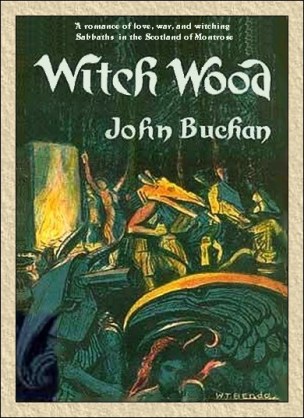
Before the real drama started–i.e., before the Ss got hostile–I began writing a short story, my first foray into allegory.  At least, that was the plan.  It was entitled, ‘Foothold in Churchville.’  It was dual-inspired by John Buchan’s Witch Wood and, of course, the developments in A. Church and its locale (‘Churchville’).

Image result for john buchan witch wood

Imagine my surprise when I looked it up today, after 3 years in the archives, and read what I’ve included below.

There had already been red flags, warnings that the churchy majority culture in the area was not all it appeared to be, and the event which precipitated the writing of this story was not actually something that happened in A. Church, but rather its neighbour down the road, which had just kicked out its pastor.   The story was supposed to be about discovery of the ‘foothold’ (the biblically literate reader will know whose) and revival.  Then, I may have entertained some unspoken, subconscious fantasy that it was prophetic.  Perhaps it was, in a way…

A Foothold in Churchville (September 2013)

When Alban MacDiarmiad arrived in Churchville after a year abroad, he was incensed. When he’d come back for a periodic visit in the three or four years before, things had been different. Before he never had any reason to not be very happy to be back in the neighbourhood where he’d spent his summers and Christmases after his parents divorced. Their split had left him bitterly disappointed with both of them, and when the opportunity to live with his uncle for the remainder of his undergrad years presented itself, he took it without a second thought. After graduation, he went further afield to graduate school, and then further still across the sea. But his visits twice to thrice a year came soon enough. He would step out of some nondescript but nice rental car, breathe deeply but softly, listening for the sounds of the livestock in the scattered farms, the wind whipping across the fields (though now it drove through lines of corn rather than the white whirl of Midwestern snow), the smells of earth and animals and wildflowers filling his nose and lungs. So different from the fume-filled atmosphere of bustling university towns.

This time, he stood at the end of his uncle’s drive and scrutinized the landscape and neighboring houses with what approximated, for him, a scowl. It softened after a few moments, and after taking in all the view, it melted into a sad half-smile. While driving, the anger had risen to its peak as he neared the parsonage and church, a pair of white simple edifices blinking out from the green of woods and fields. In his cynicism, Alban thought of the whitewashed sepulchers. But his eyes moved again over the rolling hills, caught sight of the sleepy farm buildings in the twilight, and he knew that the sepulcher was not proper for the white patch even while the car seemed hesitant to approach.

When he’d first come to know this place, he’d found it the very image of bucolic peace and simplicity, an idyllic pastoral Arcadia, where all were family, looked after one another, even the cattle were happy, all the people praying and waiting faithfully for the rain.

But the golden veil had been quickly, almost cruelly, torn away, to reveal something no one, especially someone like Alban, could have expected. Something cold, apathetic; a bitterness, even resentment and hatred. And it was those few amongst the inhabitants themselves who had disclosed it; they had begun to take off the masks they didn’t even know they wore. It was like Tarrytown of once upon a time, but no headless Hessian roamed the woods in the autumn night. The devils, particular rather than unique to this vicinity, came out in the daylight here, even to, even beyond, the threshold of the church door.

With a sigh Alban pulled his suitcase from the trunk. These past couple of years, his uncle and cousin almost never heard him arrive, but the caramel-colored cat Pfudor greeted him on the front porch.

Welcoming committee,” Alban said, stretching out his free hand to the twitching pink nose. He put the purring fluff on his shoulder, and went in.

*

Though it was summer, and though the greetings exchanged between Alban, his uncle, and his cousin were warm, when the three of them had gathered in the living room later that night, more than one of them thought the room would have been improved by a lit fireplace. Even the cat, seemingly unbothered by the Midwest heat, stuck close by Alban. The three all sat on separate sofas facing the centre of the room, the better to see one another as they talked, though in point of fact, they didn’t talk much. Alban cradled a short whiskey and soda, while both the Rev. Rhos and his daughter Bridget chose to warm themselves with late-night sweet coffee. They spent several moments in silence, Alban half-smiling with relief that they were finally in the same room, and that the other two looked well…

Perhaps, Uncle,” Alban began, “you should tell me the latest.”

Well, where to start?” The minister’s face seemed suddenly tired, and Alban realized his uncle’s thoughts had been turned by his prompting. “I suppose I’ll say it straight out: Greg Mannix has been asked to leave.” The nephew looked at him intently, waiting for him to offer explanation.

Mannix? At Pilgrim Street church? If you’re telling me this way, I’m assuming it’s a bit—sudden?”

That’s the way I saw it.”

Don’t be mysterious,” Alban said. “He’s done good work there. Why should he be asked to leave? Or better yet, I’ll ask this—who wants him to go?”

I don’t know, and neither does he.”

Does he know the reason?”

Not that I’m aware,” his uncle replied. The reverend looked at his coffee, contemplating whether it was worth taking a sip to make a point. Finlay Rhos was not typically described as loquacious, but neither was he known for being laconic. Alban didn’t know what to make of his short answers.

How did he hear that anyone wants him to go at all?” After a few moments of silence, his cousin broke in.

You wouldn’t believe it if we told you,” she said.

Look,” said Alban, sitting up straight and waking the cat, “just get it all out. I can’t imagine this is all so dramatic as you two seem to think. You said something was going on, and now I’m here, and you can’t help beating about the bush. Has there been a scandal with Pastor Mannix?”

Yes, but not in the way you might think,” said Rev. Rhos. “Two weeks ago, the head of his council called and wanted him to meet with the elders.” He waited a moment. Alban smiled a little, nodded.

I suppose there’s not much unusual in that? Or was it not scheduled?”

It wasn’t,” his uncle replied. “But they met. And, ah, the elders told Greg he would have to leave.”

You said he doesn’t know why? I suppose they gave him an official reason…”

The official reason,” Bridget piped up, “is that three different people, families, whatever, in the congregation want him to.” After a moment of perplexed silence, her cousin answered with a laughing grunt.

Who?”

Like I said, we don’t know,” Finlay answered. “The elders said they had wanted to remain anonymous.”

And these—these irksomes, they gave no reasons?”

None that the elders gave Greg. But they would call it retirement, or moving on. No one will ‘know’ that this meeting ever happened.”

Then who cares? Why should he leave when he can’t even know the who and the why?” Alban asked, a sardonic smile creeping across his face. Bridget laughed a short, bitter laugh, but let her father answer.

Because,” the minister said slowly, “these families said they would leave if Mannix didn’t.”

What?!” the young man exclaimed, moving to the edge of his seat. “That’s absurd! I know the man’s not Edwards, but he’s a good pastor. He’s just,” Alban tried to think of a more elegant way to put it, but went with his first though, “he’s just a good guy. I’ve—I’ve heard him preach several times, been with you to his house for dinner–” He stopped and looked up. “What about his wife?”

She had a difficult time with it at first, but she’s doing better.”

They’re not going to give in, are they?”

You don’t think they should?”

Ha!” Alban burst out, then took a sip of his drink. The cat nuzzled his wrist. “Would you? Now seriously, I’m sure you’d say there’s a right way to get a pastor to move on when he’s done his work in a place.”

I’m sure.”

But this can’t be it,” Alban muttered, shaking his head. “So he is going to do it. He’s going to leave.”

The plot thickens,” said Bridget from the other sofa.

How can it?”

Pastor Straighton from Greys Hawley said that the three ‘parishioners’ who have called for Mannix’ resignation all phoned the chief elder on the same day.” Alban looked at her intently.

Then it was a conspiracy,” he said gravely.

Some might say that’s a strong word,” said Rev. Rhos from under eyebrows slightly raised.

It’s not strong enough,” Bridget murmured. “What else could you call it?”

That man has served that church faithfully, and his wife, until her illness, served it also—and this whole community teaching at your school,” here he looked at his cousin, who nodded.

Perhaps we shouldn’t have told you.” Alban sent Finlay a questioning glance.

I guess we know how—animated you can get,” Bridget ventured.

Animated? This is a gross injustice,” Alban growled.

Still, it’s not your worry. You don’t even live here anymore.”

Why’d you tell me, then? You let me have a hint of it last week when I told you I was flying back. I’ve been on pins and needles ever since.” He sank back into the sofa, drawing his glass near to his lips while he awaited an answer.

We told you because, because, well, to put it bluntly, you’re sensitive.” Alban’s eyes narrowed. “Don’t look like that; we’ve talked about this before.”

What he means is,” cut in Bridget, “is that something is going on here under the surface, here as in, this whole community. What’s going on at Pilgrim Street, Greys Hawley, and here at Ordo. They’re all connected, and we thought you would bring a fresh—fresh perspective, I guess.”

What do you mean by here in Ordo?” Alban asked.

We’ve some—difficulties, of our own,” his uncle replied, seeming to smile though sounding so very sad.

Ah,” Alban said, “I think I know…”

What do you mean?”

I’ve, I’ve had a dream… More than once, and when you said that, about difficulties, I remembered it. Yeah, that’s right; I’ve had it at least three or four times in the last couple of months.” Father and daughter looked at each other, then back at Alban. “I thought it was strange, and knew it pertained to—shall we say, ‘things not temporal’, but when I reflected on it, it simply didn’t seem relevant to St. Fridewide’s.”

Funny name,” remarked Bridget.

Old church,” Alban smiled, “but anyway— But I also didn’t think it’d have anything to do with Ordo. I’ll try to remember details, if you like.”

Please do.” Finlay leaned in, almost instinctively, toward his nephew, whose tones became quite hushed.

Well, here goes.” He closed his eyes, the better to remember what he’d seen in his sleep, and so as not to be distracted by his family’s expressions. “I was walking through fields, bright green, lush, even wet, though the sky was bright. All around were rolling hills, though there were rugged mountains in the distance. I was walking, approaching the crest of the highest hill in sight, and could hear both the sound of water and animals from the other side. When I came over the top, I could see that there was flock of sheep in the vale that opened up in front of me. There were all sorts of sheep—scraggily, old, young, fat, lean, sleeping, grazing, roaming. Many different colours too, like I never see mixed on the average sheep farm. They seemed quite content, and not really to notice me as I came nearer, so I came up to the river bank and sat down among them.” Alban paused, emptied his glass, and cleared his throat. He could see almost a ‘so what?’ look in his cousin’s face, and went on. “While I was sitting there, I realized that there were actually a few sheep who were quite busy; there was one ewe who had a really strange—bleat, I guess we call it.”

What? A strange what?”

A strange sheep-sound. I mean, she sounded like a sheep, but she was very ‘growly’. I know that sounds dumb, but I can’t think of any other way to describe it. She didn’t really seem to do much besides move around and bump the other sheep, no matter what they were doing, just to get them to notice her. Once they were looking at her she’d stamp the ground in the way horses do, and make that growly sound. Most of the time, they’d look and listen for a moment, then move off, and sometimes she’d follow them a few steps, growling and stamping her little hoofs. But after a while another sheep came along who caught my eye. And he was weirder.”

Weirder?”

Well, he made a lot of noise; he wasn’t loud, but he was just chattering, all the time.”

How’s that weird?” Bridget asked. “I’m sure there are plenty of talkative sheep. Pfudor whines all the time!”

Fine then, I can’t explain it,” Alban said, then shut his eyes again. “But it wasn’t just that; this sheep was wearing this tiny little crown, kind of stuck into the wool at the top of his head.” His uncle chuckled. “It’s true,” Alban said, “and he seemed quite pleased with himself. But then, a little boy with a shepherd’s crook came along and called the sheep to get moving. Some of them were more ready to go than others, and they took the lead. The growly ewe sort of sat back on her haunches until she realized she’d get left behind, and reluctantly followed along. I started following them, and the boy didn’t seem to mind.”

What was he wearing?”

Bridge, don’t interrupt me with trifles. That didn’t seem to matter. I just know he was the shepherd. But! The sheep with the little crown was being quite boisterous, dancing out in front, even going in front of the kid sometimes, and a couple of the sheep, especially a parti-colored one with really big round eyes, would venture out with him… but they almost took a wrong turn, and when they shepherd called to them, the sheep with the little crown just stopped and bleated at him. They exchanged looks and sounds for a minute, and then—that sheep! It just walked right up to the boy, the parti-colored one right behind it, and bit him in the hand! Right in front of the rest of the flock; even the other sheep seemed startled by it. Before the shepherd had a chance to react, though, all of the sheep looked up, and then so did he.” Alban paused again, and his cousin urged him,

What, what happened?”

It took me a moment to realize it, but then I heard what they must have been hearing—wolves. I saw the boy take his crook into both hands and urge the sheep into a cluster, then he turned away from me, and the whole thing was over. And that’s where it’s stopped every time.” He sat up straight and opened his eyes.

That’s it?”

That’s it.” Alban looked at his uncle, who had been silent during the whole of the telling. “What do you think it means?” Rev. Rhos smiled a little.

Do you have any ideas?”

I might,” Alban replied.

And?”

I think,” he said drily, “that you need a sheepdog. And that you’re right—there’s something going on here bigger than Ordo, bigger than Pilgrim Street—this whole community is touched…”

***

I’d only written one other episode, in which Alban and his cousin’s cat, Pfudor, are out in the woods behind the parsonage in the afternoon, and the cat warns him of something ‘out there.’  What the two of them see I never quite got around to describing, even to myself.  It may always be a mystery.

***

I never finished the ‘allegory’, because the real-life story kicked into high gear, with surprising, sometimes shocking plot twists, its own false hopes, betrayed trusts, glimmers of redemption, dramatic confessions, unexpected friendships, strange Providence, and a Lord of the Rings-type series of ‘endings’.  And it ain’t over yet.

I would have hoped this story was a halfway good one.  But what we have instead is what makes up veritaspraebita.

Of course, the committees, church visitors and other miscreants in this plot have produced fiction, but of the desperate, self-serving, vague and unimaginative type.  Yet they get ‘published’ (if only by classis, haha)–go figure.  Still, this blog has had sufficient readership to prove that you don’t need Zondervan for effective publicity.  Just something interesting to say, and a little conviction behind it.

It was Thanksgiving this past week: let me say that I’m grateful for both my regular readers, and every visitor who comes to this blog with an open mind and an honest, inquiring eye.  God bless you.

[Return to Table of Contents.]                                                        The Big Picture.–>

What about Love?

<–Lead by Example.                                               Strangeness and Fictions.–>

The longest chapter in the Bible…Psalm 119…as I read it again today, it struck me that, while it is a prayer, with several different components, including praise, thanksgiving, and petition, it is also a love song, the expressed object of love and delight being… the Law.

ps-119-imIn our New Covenant age, even with good biblical teaching about the purpose, value, and even Jesus’ view, of the Law, we may find such expressions of love for the Law strange.  Because way deep down, even if we’re not anti-nomians, we’re often thinking, ‘Ah, who needs that?  What are you, a legalist?  A Pharisee?’

But when people in the church talk about love, I’ll take my cue from the Son of David, who taught that Love is the fulfilment of the Law, Matt.22:36-40 (Paul also states this twice quite clearly in Romans 13, as does James in ch.2 of his epistle), and from David himself, who declares in many different iterations, ‘Oh how I love your law!  It is my meditation all the day.’ Ps.119:97 (see also esp. vv. 113, 163).

One might argue that loving God, loving neighbour, and loving the church itself first requires psalmist-level zeal for God’s Law and His Word: that is the definition, even definer, and measure of love.  Love does the godly thing–the right thing.

[Return to Table of Contents.]                                  Strangeness and Fictions.–>

Lead by Example.

[Return to Table of Contents.]

I sometimes wish, as I do and present my research, that I could simply ‘cite’ anonymous sources, or make general claims about things and people without specific references.  It would be so much easier, and so much quicker.  Some people are permitted to operate that way, when even more than an academic degree is on the line.  Instead, like any honest scholar (and responsible professional), I have to write hundreds of footnotes and include something like this:

Bibliography.

Aldrete, G.S. (2014) ‘Hammers, Axes, Bulls and Blood: Some Practical Aspects of Roman Animal Sacrifice’, in JRS 104:28-50. Cambridge.

Allen, T.W. (ed.) (1963) Homeri: Opera, vol. III: Odysseae I-XII, 2nd ed. Oxford.

——— (ed.) (1963) Homeri: Opera, vol. IV: Odysseae XIII-XXIV, 2nd ed. Oxford.

Anderson, W.S. (ed.) (1977) P. Ovidii Nasonis: Metamorphoses. Leipzig.

Ando, C. (2003) Roman Religion. Edinburgh.

Ankarloo, B. and Clark, S. (eds.) (1999) Witchcraft and Magic in Europe, Volume 2: Ancient Greece and Rome. Philadelphia, PA.

Aricó, G. (1991) ‘La Vicenda di Lemno in Stazio e Valerio Flacco’, in Korn and Tscheidel (1991) 197-210.

Augoustakis, A.ed. (2013) Ritual and Religion in Flavian Epic. Oxford.

Baier, T. (2001) Valerius Flaccus Argonautica Buch VI: Einleitung und Kommentar (Zetemata 112). Munich.

Bal, M. and Lewin, J.E. (1983) ‘The Narrating and the Focalizing: A Theory of the Agents in Narrative’, Narratology 17.2:234-69. University Park, PA.

Barich, M. (2009) Valerius Flaccus, Argonautica: a verse translation. Gambier, OH.

——— (2014) ‘Poet and Readers: Reflections on the Verbal and Narrative Art of Valerius Flaccus’ Argonautica’, in Heerink and Manuwald (2014) 29-48.

Bates, C. (ed.) (2010) The Cambridge Companion to Epic. Cambridge.

Beagon, M. (2014) ‘Wondrous Animals in Antiquity’, in Campbell (2014) 414-40.

Beard, M., North, J. and Price, S. (1998) Religions of Rome. Vol. 1: A History. Cambridge.

Bell, S. and Willekes, C. (2014) ‘Horse Racing and Chariot Racing’, in Campbell (2014) 478-90.

Bernstein, N.W. (2014) ‘Romanas veluti saevissima cum legiones Tisiphone regesque movet: Valerius Flaccus’ Argonautica and the Flavian Era’, in Heerink and Manuwald (2014) 154-69.

Bessone, F. (1991) ‘Valerius, Apollonius, and die Gleichnisse: Umformung der Vorlage und Kompositionstechnik’, in Korn and Tscheidel (1991) 73-87.

——— (2013) ‘Critical Interactions: Constructing heroic models and imperial ideology in Flavian epic’, in Manuwald and Voigt (2013) 87-106.

Bodson, L. (2014) ‘Zoological Knowledge in Ancient Greece and Rome’, in Campbell (2014) 556-78.

Boyle, A.J. (ed.) (1993) Roman Epic. London.

Boyle, A.J. and Dominik W.J. (eds.) (2003) Flavian Rome: Culture, Image, Text. Leiden.

Buckley, E. (2013) ‘Visualizing Venus: Epiphany and Anagnorisis in Valerius Flaccus’ Argonautica’, in Lovatt and Vout (2013) 78-98.

——— (2014) ‘Valerius Flaccus and Seneca’s Tragedies’, in Heerink and Manuwald (2014) 307-25.

Byre, C.S. (1996) ‘Distant Encounters: The Prometheus and Phaethon Episodes in the Argonautica of Apollonius Rhodius’, AJP 117.2:275-83. Baltimore.

——- (1996) ‘The Killing of Apsyrtus in AR’s Argonautica’, Phoenix 50:3-16. Toronto.

Campbell, G.L. (ed.) (2014) The Oxford Handbook of Animals in Classical Thought and Life. Oxford.

Castelletti, C. (2014) ‘A Hero with a Sandal and a Buskin: the Figure of Jason in Valerius Flaccus’Argonautica’, in Heerink and Manuwald (2014) 173-91.

Clauss, J.J. (1993) The Best of the Argonauts: The Redefinition of the Epic Hero in Book One ofApollonius’ Argonautica. Berkeley.

——— (2000) ‘Cosmos without Imperium: The Argonautic Journey Through Time’, in Harder, Regtuit and Wakker (2000) 11-32.

——— (2014) ‘Myth and Mythopoesis in Valerius Flaccus’ Argonautica’, in Heerink and Manuwald (2014) 99-114.

Coleman, R. (1982) ‘The Gods in the Aeneid’, Greece & Rome 29.2:143-68. Cambridge.

Courtney, E. (ed.) (1970) C. Valeri Flacci: Argonauticon, Libri Octo. Leipzig.

Criado, C. (2013) ‘The contradictions of Valerius’ and Statius’ Jupiter’, in Manuwald and Voigt (2013) 195-214.

Cruttwell, R.W. (1947) Virgil’s Mind at Work: An Analysis of the Symbolism of the Aeneid. Oxford.

Davis, P.J. (2014) ‘Medea: From Epic to Tragedy’, in Heerink and Manuwald (2014) 192-210.

de Jong, I.J.F. (2014) Narratology and Classics: A Practical Guide. Oxford.

Deremetz, A. (2014) ‘Authorial Poetics in Valerius Flaccus’ Argonautica’, in Heerink and Manuwald (2014) 49-71.

Dombrowski, D. (2014) ‘Philosophical Vegetarianism and Animal Entitlements’, in Campbell (2014) 535-55.

Effe, B. (2001) ‘The Similes of Apollonius Rhodius. Intertextuality and Epic Convention’, in Papanghelis and Rengakos (2001) 147-69.

Egan, R. (2014) ‘Insects’, in Campbell (2014) 180-191.

Eigler, U. and Lefévre, E. (eds.) (1998) Ratis omnia vincit: Neue Untersuchungen zu den Argonautica des Valerius Flaccus II. Munich.

Ekroth, G. (2014) ‘Animal Sacrifice in Antiquity’, in Campbell (2014) 324-54.

Feeney, D.C. (1993) The Gods in Epic: Poets and Critics of the Classical Tradition. Oxford.

Ferenczi, A. (2004) ‘Narratologische Beobachtungen über die Argonautica‘, in Spaltenstein (2004b) 47-54.

Finkelberg, M. (2011) The Homer Encyclopedia. Chichester.

Fögen, T. (2014) ‘Animal Communication’, in Campbell (2014) 216-232.

Fowler, D. (1991) ‘Narrate and Describe: The Problem of Ekphrasis’, in JRS 81:25-35. Cambridge.

——- (2000) Roman Constructions: Readings in Postmodern Latin. Oxford.

——— (2000b) ‘Deviant Focalization in Vergil’s Aeneid‘, in Ibid. (2001) 40-63.

——- (2001) ‘Introduction: Narrative’, in Harrison (2001) 65-9.

Fränkel, H. (ed.) (1961) Apollonii Rhodii: Argonautica. Oxford.

Frings, I. (1998) ‘Die Rettung des Thoas’, in Eigler and Lefévre (1998) 261-8.

Fucecchi, M. (2006) Una Guerra in Colchide: Valerio Flacco, Argonautiche 6, 1-426. Pisa.

——— (2013) ‘Looking for the Giants’, in Manuwald and Voigt (2013) 107-22.

——— (2014) ‘War and Love in Valerius Flaccus’ Argonautica’, in Heerink and Manuwald (2014) 115-35.

Gale, M.R. (2000) Virgil on the Nature of Things: The Georgics, Lucretius and the Didactic Tradition. Cambridge.

—— (2007) Myth and Poetry in Lucretius. Cambridge.

Ganiban, R. (2014) ‘Virgilian Prophecy and the Reign of Jupiter in Valerius Flaccus’ Argonautica,’ in Heerink and Manuwald (2014) 251-68.

Gantz, T. (1996) Early Greek Myth: A Guide to Literary and Artistic Sources, vol. I. Baltimore.

Garson, R.W. (1963) ‘The Hylas Episode in Valerius Flaccus’ Argonautica’, CQ 13: 260-7. Cambridge.

——— (1969) ‘Homeric Echoes in Valerius Flaccus’ Argonautica’, CQ 19: 362-6. Cambridge.

Gärtner, U. (1994) Gehalt und Funktion der Gleichnisse bei Valerius Flaccus. Stuttgart.

Getty, R. J., (1940) ‘The Introduction to the Argonautica of Valerius Flaccus’, Classical Philology 35.3:259-73. Chicago.

Gill, C., and Wiseman, T.P. (eds.) (1993) Lies and Fiction in the Ancient World. Liverpool.

Green, S.J. (2009) ‘Malevolent Gods and Promethean Birds: Contesting Augury in Augustus’s Rome’, TAPA 139.1:147-67. Baltimore.

Griffin, J. (2010) ‘Greek Epic’, in Bates (2010) 13-30.

—— (2013) Latin Poets and Roman Life. Bristol.

Hawtree, L.J. (2011) Wild Animals in Roman Epic. Diss. Exeter.

——— (2014) ‘Animals in Epic,’ in Campbell (2014) 73-83.

Hardie, P. (1989) Virgil’s Aeneid: Cosmos and Imperium. Oxford.

—— (1993) The Epic Successors of Virgil. Cambridge.

——– (2013) ‘Flavian Epic and the Sublime’, in Manuwald and Voigt (2013) 125-38.

Harder, M.A., Regtuit, R.F. and Wakker, G.C. (eds.) (2000) Apollonius Rhodius. Leuven.

Harrison, S.J. (ed.) (2001) Texts, Ideas, and the Classics. Oxford.

——— (2001b) Picturing the Future: The Proleptic Ekphrasis from Homer toVergil‘, in Id. (ed.) (2001) 70-92.

——— (2007) Generic Enrichment in Vergil and Horace. Oxford.

——— (2013) ‘Proleptic Ekphrasis in Flavian Epic: Valerius Flaccus and Statius’, in Manuwald and Voigt (2013) 215-27.

Heerink, M. (2013) ‘Silius versus Valerius: Orpheus in the Punica and the Argonautica’, in Manuwald and Voigt (2013) 267-78.

——— (2014) ‘Valerius Flaccus, Virgil and the Poetics of Ekphrasis,’ in Heerink and Manuwald (2014) 72-95.

Heerink, M. and Manuwald, G. (eds.) (2014) Brill’s Companion to Valerius Flaccus. Leiden.

Hershkowitz, D. (1998a) The Madness of Epic: Reading Insanity from Homer to Statius. Oxford.

——— (1998b) Valerius Flaccus’ Argonautica: Abbreviated Voyages in Silver Latin Epic. Oxford.

Hinds, S. (1998) Allusion and Intertext. The Dynamics of Appropriation in Roman Poetry. Cambridge.

Hollis, A.S., ed. (1989) Ars Amatoria, Book 1. Oxford.

Howe, T. (2014) ‘Domestication and Breeding of Livestock: Horses, Mules, Asses, Cattle, Sheep, Goats and Swine’, in Campbell (2014) 99-108.

Hulls, J.-M. (2013) ‘“Well-stored with Subtle Wiles”: Pyrene, Psamathe and the Flavian Art of Interaction,’ in Manuwald and Voigt (2013) 343-60.

Hyland, A. (2003) The Horse in the Ancient World. Stroud.

Jennison, G. (1937) Animals for Show and Pleasure in Ancient Rome. Manchester.

Johnston, P.A., Mastrocinque, A. and Papioannou S. (eds.) (2016) Animals in Greek And Roman Religion and Myth. Cambridge.

Joyce, J.W., trans. (2008) Thebaid: A Song of Thebes. Ithaca, NY.

Keith, A. (2014) ‘Ovid and Valerius Flaccus’, in Heerink and Manuwald (2014) 269-89.

Kitchell Jr., K. (2014) Animals in the Ancient World from A to Z. London.

Kleywegt, A.J. (2005) Valerius Flaccus, Argonautica, Book I: A Commentary. Leiden.

Korn, M. and Tscheidel, H.J. (eds.) (1991) Ratis omnia vincit: Untersuchungen zu den Argonautica des Valerius Flaccus. Hildesheim.

Kozák, D. (2013) ‘Traces of the Argo’, in Manuwald and Voigt (2013) 247-66.

Kyle, D. (2007) Sport and Spectacle in the Ancient World. Oxford.

Kyriakides, S. and De Martino. F., eds. (2004) Middles in Latin Poetry. Bari.

Lonsdale, S. H. (1990) Creatures of Speech: Lion, Herding and Hunting Similes in the Iliad. Stuttgart.

Lovatt, H. and Vout, C. (eds.) (2013) Epic Visions: Visuality in Greek and Latin Epic and its Reception. Cambridge.

Lovatt, H. (2013) The Epic Gaze: Vision, Gender and Narrative in Ancient Epic. Cambridge.

——- (2014) ‘Teamwork, Leadership and Group Dynamics in Valerius Flaccus’ Argonautica’, in Heerink and Manuwald (2014) 211-28.

MacKinnon, M. (2014) ‘Hunting’, in Campbell (2014) 203-15.

——— (2014) ‘Pets’, in Campbell (2014) 269-81.

Malamud, M.A., and McGuire, jr., D.T. (1993) ‘Flavian Variant: Myth, Valerius’ Argonautica’, in Boyle (1993) 192-217.

Manuwald, G. (1999) Die Cyzicus-Episode und Ihre Funktion in den Argonautica des Valerius Flaccus. Göttingen.

——— (2009) ‘What Do Humans Get to Know about the Gods and their Plans? On Prophecies and their Deficiencies in Valerius Flaccus’ Argonautica’, Mnemosyne 62:586-608. Leiden.

——— (ed.) (2015) Valerius Flaccus: Argonautica Book III. Cambridge.

Manuwald, G. and Voigt, A. (eds.) (2013) Flavian Epic Interactions. Berlin.

Maras, D.F. (2016) ‘Numero Avium Regnum Trahebant: Birds, Divination, and Power Amongst Romans and Etruscans’, in Johnston et al. (2016) 85-114.

Martin, J. (ed.) (1953) T. Lucreti Cari: de Rerum Natura, Libri Sex. Leipzig.

Martindale, C.A. (1993) Redeeming the Text. Cambridge.

—— (2005) Latin Poetry and the Judgement of Taste: An Essay in Aesthetics. Oxford.

Mayor, A. (2014) ‘Animals in Warfare’, in Campbell (2014) 282-93.

McInerney, J. (2014) ‘Civilization, Gastronomy, and Meat-eating’, in Campbell (2014) 248-68.

Melville, A.D., trans. (1986) Ovid: Metamorphoses. Oxford.

Monro, D.B., and Allen, T.W. (eds.) (1920) Homeri: Opera, vol. I: Iliadis I-XII, 3rd ed. Oxford.

——— (eds.) (1920) Homeri: Opera, vol. II: Iliadis XII-XXIV, 3rd ed. Oxford.

Mori, A. (2008) The Politics of Apollonius Rhodius’ Argonautica. Cambridge.

Mozley, J.H. (1934) Valerius Flaccus: Argonautica. Cambridge, MA.

Mynors, R.A.B (ed.) (1969) P. Vergili Maronis: Opera. Oxford.

Newmyer, S. (2014) ‘Being the One and Becoming the Other: Animals in Ancient Philosophical Schools’, in Campbell (2014) 507-34.

Ogden, D. (2013) Drakōn: Dragon Myth and Serpent Cult in the Greek and Roman Worlds. Oxford.

——— (2014) ‘Animal Magic’, in Campbell (2014) 294-309.

Östenberg, I. (2014) ‘Animals and Triumphs’, in Campbell (2014) 491-506.

Papanghelis, T.D. and Rengakos, A. (eds.) (2001) A Companion to Apollonius Rhodius. Leiden.

Parkes, R. (2009) ‘Sed tardum (Ach. 1.47): Valerius Flaccus’ Argonautica as Prequel to Statius’ Achilleid’, Materiali e Discussioni per l’Analisi dei Testi Classici 63:291-7. Rome.

———- (2014) ‘The Epics of Statius and Valerius Flaccus’ Argonautica’, in Heerink and Manuwald (2014) 326-39.

Penwill, J. (2013) ‘Imperial Encomia in Flavian epic’, in Manuwald and Voigt (2013) 29-54.

Potts, C.R. (2009) ‘The Art of Piety and Profit at Pompeii: A New Interpretation of the Painted Shop Façade at IX.7.1-2’, Greece & Rome 56.1:55-70.

Pütz, B. (2014) ‘Good to Laugh With: Animals in Comedy’, in Campbell (2014) 61-72.

Reiks, R. (1981) ‘Die Gleichnisse Vergils’, ANRW ii 31.2: 1011-1110.

Rose, H.J. (1956) A Handbook of Latin Literature. London.

Rüpke, J. (2007) A Companion to Roman Religion. Hoboken.

Scott, W.C. (2009) The Artistry of the Homeric Simile. Hanover, NH.

Scheid, J. (2007) ‘Sacrifices for Gods and Ancestors’, in Rüpke (2007) 263-72.

Schenk, P. (1991) ‘Cyzicus, Perses and das Eingreifen der Götter’, in Korn and Tscheidel (1991) 139-53.

Segal, C. (1971) The Theme of the Mutilation of the Corpse in the Iliad. Leiden.

Shackleton Bailey, D.R. (ed.) (1997) M. Annaei Lucani: de Bello Civili, Libri X, 2nd ed. Stuttgart and Leipzig.

——- (ed., trans.) (2003) Statius’ Thebaid, Books 1-7. Cambridge, Mass.

Shelton, J.-A. (2014) ‘Spectacles of Animal Abuse’, in Campbell (2014) 461-77.

Shipton, G.M.W. (1986) ‘The Iuvenca Image in Catullus 63’, CQ 36.1: 268-70. Cambridge.

Slatkin, L. (1992) The Power of Thetis: Allusion and Interpretation in the Iliad. Berkeley.

Smith, A.V., Proops, L., Grounds, K., Wathan, J., and McComb, K. (2016) ‘Functionally relevant responses to human facial expressions of emotion in the domestic horse (Equus caballus)’, Biology Letters 12:2.

Smith, S.D. (2014) Man and Animal in Severan Rome: The Literary Imagination of Claudius Aelianus. Cambridge.

Sommerstein, A.H. (2010) The Tangled Ways of Zeus: And Other Studies In and Around Greek Tragedy. Oxford.

Spaltenstein, F. (2002) Commentaire des Argonautica de Valérius Flaccus (livres 1 et 2). Brussels.

——— (2004) Commentaire des Argonautica de Valérius Flaccus (livres 3, 4 et 5). Brussels.

——— (ed.) (2004b) Ratis omnia vincit: Untersuchungen zu den Argonautica des Valerius Flaccus III. Munich.

——— (2005) Commentaire des Argonautica de Valérius Flaccus (livres 6, 7 et 8). Brussels.

Stadler, H. (1991) ‘Hercules’ Kampf mit dem Seeungheuer (Val. Fl. 2,497-549)’, in Korn and Tscheidel (1991) 181-96.

Stephens, S.A. (2015) Callimachus: the Hymns. Oxford.

Stover, T. (2003) ‘Confronting Medea: Genre, Gender, and Allusion in the Argonautica of Valerius Flaccus’, Classical Philology 98:123-47. Chicago.

——– (2009) ‘Apollonius, Valerius Flaccus, and Statius: Argonautic Elements in Thebaid 3.499-647′, American Journal of Philology, 130.3:439-55. Baltimore.

——— (2011) ‘Unexampled Exemplarity’, in TAPA, 141.1: 171-200. Baltimore.

——— (2012) Epic & Empire in Vespasianic Rome: A New Reading of Valerius Flaccus’ Argonautica. Oxford.

Struck, O. (2014) ‘Animals and Divination’, in Campbell (2014) 310-23.

Summers, W. (1894) A Study of the Argonautica of Valerius Flaccus. Cambridge.

Syme, R. (1929) ‘The Argonautica of Valerius Flaccus’, CQ, 23:129-37. Cambridge.

Taylor, P.R. (1994) ‘Valerius’ Flavian Argonautica’, CQ 44:212-35. Cambridge.

Thompson, D.W. (1895) A Glossary of Greek Birds. Oxford.

Thumiger, C. (2014) ‘Animals in Tragedy’, in Campbell (2014) 84-98.

Toohey, P. (2010) ‘Roman Epic’, in Bates (2010) 31-54.

Toynbee, J.M.C. (1973) Animals in Roman Life & Art. London.

Trzaskoma, S. and Smith, R., trans. (2007) Apollodorus’ Library and Hyginus’ Fabulae: Two Handbooks of Greek Mythology. Indianapolis.

Tuttle, A. (2013) ‘Argive Augury and Portents in the Thebaid‘, in Augoustakis (2013) 71-87.

Wijsman, H. J.W. (1996) Valerius Flaccus, Argonautica, Book V: A Commentary. Leiden.

———. (2000) Valerius Flaccus, Argonautica, Book VI: A Commentary. Leiden.

Wilhelm, R.M. (1988) ‘Cybele: the Great Mother of Augustan Order’, Vergilius 34: 77-101. Atlanta.

Zissos, A. (1999) ‘Allusion and Narrative Possibility in the Argonautica of Valerius Flaccus’, Classical Philology 94:289-301. Chicago.

——— (2003) ‘Spectacle and Elite in the Argonautica of Valerius Flaccus,’ in Boyle and Dominik (2003) 659-84.

 ——– (2004) ‘Terminal Middle: The Argonautica of Valerius Flaccus’, in Kyriakides and De Martino (2004) 311-44.

——— (2008) Valerius Flaccus’ Argonautica, Book1: A Commentary. Oxford.

Empty.

In spite of the oft-repeated exhortation of an old friend,

you never do get used to disappointment.

It’s standing in a courtroom in your dreams

night after night,

the jury with unshining eyes

reading the same verdict again and again–

‘We don’t give a sh*t.’

And the prosecution went home long ago.

The defense pops yet another cork–

one could float away on the bubbles.

Float.

Or else drown in grief.

If you’re the family of the victim,

you know how you hang on every word

of the foreman, the judge.

When it all comes to cotton candy,

you know there’s jelly in the spine,

sweet on the surface,

sour to the swallow.

In the dawn the shadows scatter,

daylight smells fresh.

But like the cycle of the waxing-waning moon–

bright to black, bright to black–

the night brings back the close damp

of that wood-panelled room

with no God, no Truth, nothing but cold.

The same case, the same talk, the same waste.

And they shuffle out, they shuffle in.

All rise–the same ‘We don’t give a sh*t.’

The hope always lives, always dies,

daylight comes, then night–

hated hope springs up again,

only to be cut down and take your heart with it.

It’s a torment that promises to fade,

but it will be back tomorrow.

Image result for moon

<–I am the Friend.                                                           Lead by Example.–>